Horse As Teacher, The Path to Relationship is now available for purchase. Click here for details!
 |
 |
 |
Archive for the ‘Natural Horsemanship’ Category
10 Good Reasons to Use Homeopathy
Referenced from Riva’s Remedies. Originally posted on the Canadian Society of Homeopaths at www.csoh.ca
1. Natural Action
Homeopathy works by stimulating the body’s own natural defence mechanism to promote health and to resist infection and susceptibility to disease. Although gentle, the results can be powerful and long lasting.
2. Health & Well-Being
Homeopathy improves health generally, rather than merely alleviating localized symptoms. It treats the whole individual, acting on the mental and emotional levels as well as the physical level, providing a balance in overall health and an increased sense of well-being and quality of life.
3. Effective Medicine
When used correctly, homeopathy can be an extremely effective system of medicine, providing long-lasting relief from many acute and chronic conditions and illnesses.
4. No Harmful Side Effects
Homeopathic treatment offers a gentle and non-invasive approach to health, producing no toxic side effects, no dependency or addiction, and no withdrawal.
5. Cost Effective
Homeopathic medicines are surprisingly inexpensive to purchase, especially when compared to over-the-counter and prescription drugs.
6. Fast-Acting First-Aid Relief
Homeopathy can be safely used at home or on the road to provide rapid relief for minor problems such as bruises, simple burns, sprains, insect bites, gastric upsets, etc. However more serious or long-lasting complaints should be treated by a qualified homeopath.
7. Not Tested on Animals
Homeopathic medicines are tested only on healthy humans in order to determine the range of action of each remedy.
8. Complimentary Medicine
Homeopathic medicines can be used independently or along with conventional drugs and other therapies (with the full knowledge of your other healthcare providers). It can often alleviate unpleasant side effects of conventional treatments (e.g., chemotherapy).
9. Environmentally Friendly
Homeopathy has no adverse impact on the environment. There is not waste of energy or natural resources in the manufacturing process and no pollution of the water supply, oceans, or dump sites when used. In fact, homeopathy is the ultimate Green Medicine!
10. Medicine of the Future
Homeopathy is the second most widely-used system of medicine in the world. It is available in most countries and is gaining in popularity as an alternative to conventional medicine.
Five Ways to Impress Your Horse…Emotionally
Reference: This article originally appeared in the Riva’s Remedies newsletter.
1. Be emotionally fit
Don’t allow your horse to push your buttons, raise your blood pressure; make you yell or cause you to lose your temper. Horses are fully aware of your emotional state at all times and some of them have complete mastery over your reactions. They’re in control; you’re out of control. Every time you become unglued they win and you lose. It’s a life lesson for everything you do – let them teach you well.
2. Communicate with your horse
If your horse is showing signs of impatience, un-cooperation and irritability seek out the underlying cause be it physical, emotional and/or spiritual. Too many times it’s blamed on attitude but attitude always has a reason. Horses, like all sentient beings need to be listened to – on all levels!
3. Know what fun is
All horses have a big play drive which motivates much of their behavior. If you don’t have a sense of humour you will not only misinterpret their actions but you will miss out on a lot of fun and adventure. Smile at everything they do whether it is desired behavior or not. Then play with them.
4. Just be
Horses spend the majority of their time “hanging out” with the herd. Since they see you as a herd member (albeit with two legs, bare skin and weird body coverings) they rightfully expect you to you to be a “being”, not a “doing”. Spend quality time with them with no demands, no commands and no tasks. “To be” is a state of mind that horses clearly understand.
5. Raise your consciousness
Know that horses are divine beings but are also driven by biological instincts and urges which can cause them to be unkind and inconsiderate to their herd members at times, including you. The Animal Kingdom is not perfect. Surprise them by setting your intention to change their behaviour from negative to positive and then show them ways to bring out their goodness by raising their vibration…and yours.
Easing grief with the Bach Flowers
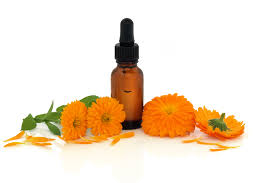 Reference: Article sourced from the Bach Flower Email Bulletin by Inner Harmony Healing.
Grief is a multifaceted response to loss, particularly to the loss of someone or something that has died, to which a bond or affection was formed.
Everyone deals with grief in different ways, and it also depends on if the grief has come on because of a sudden death in the family.
The Bach Flowers can offer a gentle way to help our emotions in times of grief, and meet individual needs. Here are some remedies that may help…
Suffering from shock and/or trauma?
Star of Bethlehem assists with the distress and unhappiness following a shock (which can be timeless). It can provide comfort and consolation.
Feeling guilty about something you thought you should have done or not done?
Pine is for guilt and self-blame and can relieve us from guilty feelings.
Just want to feel miserable and shut yourself off from the outside world?
Water Violet is for when you just have to withdraw and seek solace in isolation. It can help bring on the desire to interact with others.
At at end of your endurance with grief and feel as there is no hope in feeling happy again?
Sweet Chestnut is for when you have reached the end of your endurance, and can liberate us with optimism and a peace of mind.
Worried about how the loss can impact other family members of pets?
Red Chestnut is for those who are over-concerned for the feelings of loved ones and provides calm and rational concern.
Feeling that all the joy and happiness has been sucked out of your world?
Wild Roseis for feelings of apathy, resignation and disinterest in life. It can bring about a lively and enthusiastic interest in life again.
The Four Pillars of Natural Hoof Care
Reference: Excerpts from an article by Narayan Khalsa from www.horseconscious.com
In our last article, we shared a few tenets on the importance of minerals in the horse’s diet to improve hoof health. What are some of the other factors we can look at to care for them even further? There are four basic pillars of hoof care. Lets look at them in detail:
Natural Boarding
In a natural boarding environment we emulate this need to move by creating what we call a paddock paradise. By setting up multiple feed stations in your paddock, using small mesh hay nets, propagating other interesting and healthful items like loose rock salt, we encourage our horses to move all day. This keeps your horse in shape, happy, entertained, and feet healthy. Adding rocks or pea gravel to parts of the paddock is great too. Being a herd animal, they need companionship. They value family like we humans do, and the need to have other horses in contact with them all the time is part of their nature in order to groom, play, even fight, but more than that – to love.
Natural Trim
By mimicking the natural wear patterns, only removing that which would be worn away in the wild, we help precipitate natural growth patterns, coaxing into form the truly natural hoof belonging to that unique creature. There is no set angle, no set toe length, and no set measurement of any kind. There is only undying variation in nature, and to try to manipulate a hoof into some set of measurements is dangerous. A NHC Professional does not need to worry about any of this, but simply apply the wear patterns and let nature take its course. Again a true Natural Trim is nothing more and nothing less than applying these wear patterns and only removing that which would be worn away in the wild.
Natural Diet
By eliminating high sugar commercial feeds, high sugar supplements, and high sugar grasses, you are eliminating one major cause of laminitis, the number two killer of domestic horses. Too much sugar saturates the hindgut, resulting in a bacterial imbalance that through a cascade of events starts to create a separation of the hoof from the horse. This is extremely painful for a horse and easily avoidable.
Natural Horsemanship
The horse has evolved to move in an exact fashion, through what we call the Natural Gait Complex. This is the walk, trot, canter, and gallop, in its myriad of forms. They did not evolve with a rider on their back, and so much consideration and preparation is needed. Most important, and the cornerstone of this pillar is riding in harmony with their natural gaits. By teaching a horse natural collection, the horse can develop a proper carrying shape, allowing them to carry a rider more comfortably without damaging them or causing them pain. We also recommend not mounting a horse until at least 5 years old, but if you will, closer to 7.
Introduction to Equine Behavior – Part 2
Today horsefolk remain enticed by horses and we find ourselves still attempting to appreciate how this human/horse relationship came to be, and where the relationship is headed, much as mankind has since the first girl grabbed a mane and swung on a horse to become a partner with the flighty, powerful (but trainable and tamable) grazer of the plains.
Equine behaviour is heavily influenced by socialization. Subsequently, behaviour is affected by the intensity and type of stabling and husbandry. Horses need to grow up to be horses as taught by horses to eventually lead behaviourally healthy lives. When grown, horses must be allowed to be horses with other horses to enhance willing partnerships with horsefolk. When stabled, natural must be re-created for the horse as we shall see. As we shall see, the last place a horse evolved to live is in a stall. When horses are stalled, we must re-create their constant need for friends, forage, and locomotion.
Horses are a quiet species. They prefer calm, and learn most efficiently in tranquil, familiar settings. In emulating the horse, our interactions here will be communicatively soft and calm so as not to unnecessarily upset or excite our herd. Now if there is something valid to be concerned about, say a certain enlightenment, or concern about a welfare issue, or perhaps a training or stabling method that does not align with the horse’s perspective, then we appropriately share our views with the others.
Holistic Horse Health: Is Stress Affecting Your Horse’s Liver? (Part 3)
See below for more thoughts from Madalyn Ward, DVM, on the topic of stress and how it affects a horse’s liver function.
~~~~~~~~~~~~~~~~~~~~~~~~~~~~~~~~~~~~~~~~~~~~~~~~~~~~~~~~~~~~~~~~~~~~~~~~
Solutions for Coping with Stress
High chlorophyll foods such and blue green algae have a protective and cleansing effect on liver tissue. Blue green algae and sprouted greens are also high in natural antioxidants which aid the liver in detoxifying the body.
Certain nutritional mushrooms such as Maitake, Poria, Reishi and Cordyceps aid the liver by helping to lower sugar levels in the blood. Green foods in combination with nutritional mushrooms and spouted greens support the liver and kidneys in their roles of removing toxins from the body. Exercise is also critical for helping the Liver to move Qi and to lower insulin levels in the blood.
Liver support:
• Homeopathic Nux vomica
• Milk thistle and dandelion root
• High chlorophyll foods such as blue green algae and sprouted greens
• Nutritional mushrooms
• Exercise
Stress is part of many horses’ lives but its damaging effects can be kept to a minimum with proper support for the digestive tract and liver. In addition to the stress lowering steps mentioned in last month’s newsletter you may also want to consider your horse’s temperament. Different type and temperament horses respond differently to stress and will need different support for best results.
Check out Horse Harmony to help you determine your horse’s temperament type and look at our Feeding Guide to help select the best products for your horse.
References: Dr. Greer GI seminar, Nov 2013
More from Madalyn Ward, DVM:
www.holistichorsekeeping.com
www.horseharmony.com
www.horseharmonytest.com
blog.horseharmony.com
http://www.facebook.com/HorseHarmony
Twitter: @madalynward
Horses are not a toy!… And introducing Dr. Allan Hamilton
I think we all know that horses are not a toy – they are a commitment and really, more like a lifestyle. Klaus Hempfling elaborates more in his latest video:
[youtube]http://youtu.be/Dv0AT1UkRAQ[/youtube]
What are your thoughts?
In the final screen he says, “Only if you are sure you can satisfy the enormous needs and demands of a horse regarding space, time, knowledge, experience, your personality and physical condition and also financial expenses.”
In considering taking horse into your life – it’s more about the physical and tangible (space, money, time) but your emotional, mental and spiritual capacity.
A film featuring…Dr. Allan Hamilton
Healing WITH horses (vs healing horses) is an area that is starting to pick up some steam in arena of public awareness. Why is this happening? Perhaps it’s the exploration of different areas to help heal emotional and spiritual (as well as physical) aspects of ailments or maybe it just simply is becoming more widespread. We have heard from Dr.Hamilton before – he had a feature on NBC news on how he invites medical students to his ranch to learn about experiential development and how it will benefit their journey in becoming doctors.
I am thrilled to discover that he has a film on his work as well as featuring some of those who have benefited from his facilitation.
Please visit this website for more about the film, “Playing with Magic”.
Klaus F Hempfling: Healing Aggressive Stallion
Klaus F Hempfling , like myself, uses energies, read cues to work with horses in an intuitive and non-aggressive way. He’s based in Europe where he has a wide range of programming, for horses and humans!
Check out his website for more information on his work: http://www.hempfling.com/
In his words…
“The author of ‘Dancing With Horses’ teaches the principles of primal life, against the background of both the mythological and the real horse. He emphasizes the importance of totally honest self-assessment and self-knowledge and both mental and physical self-control, demonstrating how a misplaced or misunderstood feeling, glance, posture, attitude or movement can make the difference between success and failure in the relationship with a horse.'”
In this great video, a beautiful dance of healing relationship where man is working with the horse from the inside out. Staying clear in his intention to be unconditional and accepting in whatever shows up in front of him.
Does your horse trust you (Part 2 of 2)
Improving Your Horse’s Balance
As a prey animal, your horse will feel uncomfortable unless he knows that he can move quickly and efficiently to escape from predators, regardless of the fact that he no longer lives in the wild. You can help your horse feel safe by helping his body stay supple and balanced over all four feet. For instance, take the time to correct your horse when he tries to push you around while you are on the ground, or when he leans around a corner under saddle. The indications may be subtle, but these small moments of being off balance can actually cause your horse to feel uncomfortable and unsafe. You can help your horse feel safe and secure with proper ground work and exercises under saddle that teach him to use his body in the balanced way. Eventually, your horse will begin to associate these good feelings with you, and will be well on his way to trusting you.
Controlling the Fight or Flight Instinct
Horses are easily frightened. If your horse becomes frightened and you allow his fear to escalate unchecked, he can easily become a danger to himself or others. A horse’s natural fear response is to raise his head, drop his back, and tense his muscles in preparation for flight. In a natural setting, he would then run until he was out of danger, and then relax and resume grazing. You can actually use the last step of this instinctive sequence to diffuse your horse’s fear response. When your horse becomes fearful, simply encourage him to lower his head. When a horse lowers his head and assumes the grazing posture, he automatically relaxes. With practice, you can teach your horse to lower his head on cue. More importantly, your horse will begin to associate you with this feeling of relaxation, another piece in the foundation of trust that you want to build with your horse.
The Foundation of Trust
Training and riding skills are very important in working with horses, but at the end of the day nothing is more important than trust. It’s important to spend time with your horse and get to know the different facets of his personality. However, time alone will not create trust. Unless you establish and continuously establish your position as leader, protector, and comforter, the time you spend with your horse will not necessarily result in trust. Ultimately, nothing is more important to the relationship than how your horse feels when he is with you.
About the Author
Madalyn Ward, DVM, owns Bear Creek Veterinary Clinic in Austin, Texas. She is certified in Veterinary Homeopathy and Equine Osteopathy. Memberships include American Veterinary Medical Association, American Association of Equine Practitioners, American Holistic Veterinary Medical Association, Texas Veterinay Medical Association and the Academy of Veterinary Homeopathy. She has authored several books and publishes the monthly newsletter, “Holistic Horsekeeping.”
Does your horse trust you? (Part 1 of 2)
Trust and like are two very different qualities, especially when it comes to your horse. Many horses like but don’t always trust their owners. Well-known horsemanship clinician Tom Dorrance feels that a horse’s trust for his owner is the foundation of the relationship. If your horse doesn’t trust you then his instinct for self-preservation will supersede everything else, which means that in a scary situation he will tend to react based on instinct rather than turning to you for guidance. This kind of lightning-fast reaction can easily injure you or your horse.
A horse’s lack of trust can also show up in less volatile situations. A horse has three basic needs: to be cared for, protected, and comforted. Each time you fail to meet one of these needs your horse will feel that he is alone and that he can’t trust you—a dangerous feeling for a herd animal. In response, you horse is likely to buddy up with other horses and may become barn sour or develop other behavioral issues. A horse with trust issues will often have digestive and immune system weaknesses. On the training front, not taking the time to build an initial foundation of trust can result in problems such as running through the bit, balking, rearing, or bucking.
So how do you develop this all-important foundation of trust with your horse? Unfortunately there is no simple answer. Luckily there are some good places to start including developing leadership skills, improving your horse’s balance, and controlling your horse’s fight or flight instinct.
Developing Your Leadership
When you develop a relationship with a horse you become a part of his herd, so it’s important to establish yourself as the leader of that herd. A horse who is unsure of your leadership will continually test you. This testing could be as subtle as nudging you with his nose or as blatant as walking all over you. The question is whether you can pass the test. You may think you are being kind when you ignore your horse’s attempts to invade your space, but in reality you are causing him to be unsure of his position in the herd. Correcting your horse when he invades your space is not about punishment but about giving clear and consistent direction about which kinds of behavior are acceptable and which are not. More sensitive horses will back off in response to light pressure while others will require a much stronger form of correction. The goal is to offer enough correction to prevent the horse from testing your leadership again; otherwise you are just nagging your horse and will have correct him over and over. Once your horse is clear about who is in charge, he will relax and begin to trust you.
About the Author
Madalyn Ward, DVM, owns Bear Creek Veterinary Clinic in Austin, Texas. She is certified in Veterinary Homeopathy and Equine Osteopathy. Memberships include American Veterinary Medical Association, American Association of Equine Practitioners, American Holistic Veterinary Medical Association, Texas Veterinay Medical Association and the Academy of Veterinary Homeopathy. She has authored several books and publishes the monthly newsletter, “Holistic Horsekeeping.”
Click here to get your free gift!
Privacy Policy:Your email address will never be sold, rented, or given away.