Horse As Teacher, The Path to Relationship is now available for purchase. Click here for details!
 |
 |
 |
Archive for the ‘Equine Nutrition’ Category
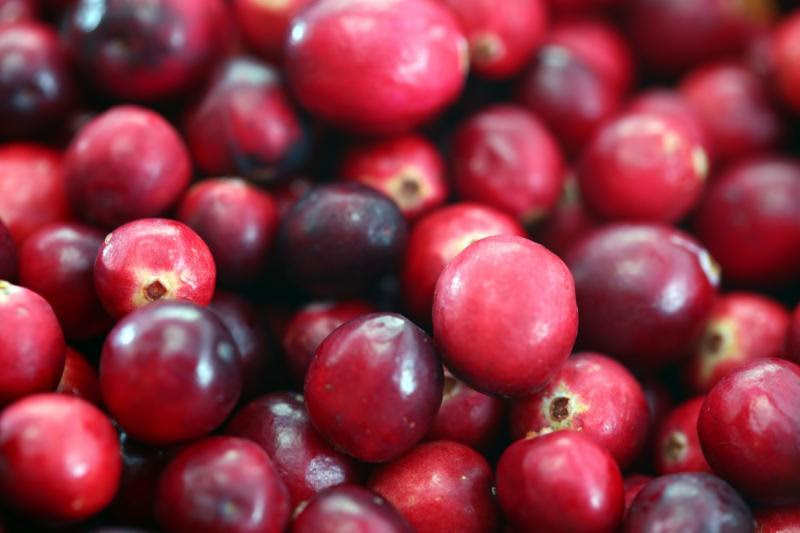
Feed Cranberries to Horses
Editor’s Note: This article has been sourced via Riva’s Remedies.
I’m always looking for new foods that horses might like to provide them with variety and extra nutrition. Turns out that raw organic cranberries are the new face around here – they gobble them right up even with the tart taste. Cranberries are rich in Manganese, Vitamin C, Vitamin E, fibre, and anti-oxidants. They are a natural anti-inflammatory and antibiotic, and are beneficial for the immune system and heart. Just add 1/4 cup to their breakfast.
Hormonal Mares

Editor’s Note: This article has been sourced via Riva’s Remedies.
Many mares exhibit hormonal problems through mood and behaviour changes. This is often seen during a mare’s cycling days, however many mare owners report problems with their behaviour on a daily basis even when they are not cycling. Unfortunately, too many times we have simply attributed this to “mares being mares”, and have not recognized that these girls are not feeling well and that they can suffer from the same anxiety, irritability, aggression, sadness and depression as women do during PMS or an unhealthy menopause. They can also have problems with cycling pains. Pain and/or emotional symptoms make it very hard for mares to tolerate being handled or ridden, to compete and/or to cooperate with other horses. Unfortunately these behaviours often get dismissed as a personality or training problem.
Hormones are powerful chemicals that have a profound effect on the neurotransmitters of the brain: estrogen has an excitatory effect on the brain, increasing serotonin and acetylcholine levels whereas progesterone has a more calming effect. Serotonin is responsible for creating positive moods and acetylcholine is necessary for focus and memory.
As with humans, diet can be an important factor – high-sugar feed such as oats or sweet feed will exacerbate hormonal symptoms. Horse owners also report that high quantities of alfalfa can negatively affect behaviour as well. (For humans, caffeine and dairy products are the most common dietary culprits that contribute to PMS and menopausal symptoms.)
Fortunately, when hormonal mares are supplemented with the appropriate nutrients and/or hormone-balancing herbal blends they will quickly improve to experience an increase in stable moods and suffer less depression, less aggression and more motivation. Beneficial nutritional supplements include the Riva’s Vitamin B6 (pyridoxine) and Riva’s Primrose Oil. Vitamin B6 is essential for the synthesis of both hormones and neurotransmitters and has the added benefit of regulating blood sugar levels. Vitamin B6 will also support pituitary and thyroid function as these endocrine glands rely on this vitamin for optimum health. Riva’s Primrose Oil provides essential fatty acids and 9% gamma-linolenic acid (GLA) which is found in the plant seeds of evening primrose oil. Primrose oil also has anti-inflammatory properties which helps with skin conditions and arthritis.
Herbal blends for hormone balance are also available as they re-balance the estrogen and progesterone levels and calm the emotions. The Riva’s Herbal Blend for Mares contains black cohosh, blessed thistle, chamomile and wild yam root to tone the ovaries and sooth the nerves. This blend will also effectively regulate erratic cycles, ease uterine cramping and/or help to increase fertility – although it is not advisable to feed it during pregnancy. This blend has an effective stabilizing effect on moods.
If the thyroid or pituitary glands are needing support in addition to the reproductive hormones then add the Riva’s Hormone Boost which contains Ashwaghanda, Chaste Berry, Kelp, Licorice Root and Raspberry Leaf. This formula will strengthen the endocrine gland system, relieve stress and balance hormone levels. It is also beneficial in cases of Equine Metabolic Syndrome, Insulin Resistance and Cushing’s since it supports the pituitary and adrenal glands and helps to regulate insulin levels and metabolism.
If the hormones are stabilized but your mare still appears uncooperative with an attitude then she either has other underlying emotional issues (she needs to be heard) or the training program should be assessed. Some “mare behaviour” has been allowed to become a pattern, in which case competent but compassionate handling will help them establish new patterns. And don’t put food down in front of “cranky” mares until their ears come forward – this might take time at first but they should learn to “smile” in the presence of food.
With good food, supplements and common-sense handling your mare will be a happy, healthy and willing partner.
“Riva’s Healing Spirit awakens the essence that resides within each one of us
– animal or human – the heart of which connects
and aligns us with the greater spirit that heals all.”Marijke van de Water, B.Sc., DHMS
Equine Health & Nutrition Specialist
Homeopathic Practitioner
Medical Intuitive & Healer
Author & Educator
For more information on your horses’ diet,
nutrition and health conditions read
“Healing Horses Their Way”
Watch the Riva’s Remedies video on YouTube “Hormonal Mares and Geldings”
What’s TRUE about beet pulp
Editor’s Note: This article has been sourced via Riva’s Remedies.
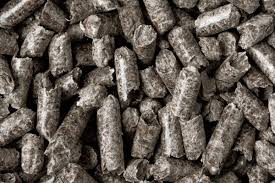
Beet pulp is the fibrous material left over after the sugar is extracted from sugar beets. It’s an excellent source of crude fibre (18%) and contains both insoluble and soluble fibre which is mostly pectin. Pectin is a highly digestible fibre which is why beet pulp is such a good energy source – horses obtain over 75% of their energy from the fermentation of fibre; not from protein, carbohydrates or oil. Beet pulp fibre is also an effective prebiotic that helps the equine hind-gut synthesize natural levels of probiotics which, in turn, helps to maintain the intestinal ecosystem including the immune system. Fibre is a natural detoxifier of the intestines and the liver and beet pulp is also high in calcium.
Beet pulp has a very low glycemic index meaning that it doesn’t cause a blood sugar spike as do grains such as oats, corn or barley. In addition, it will actually help stabilize blood sugar levels due to its high fibre content. And even though most manufacturers add 5-10% molasses to the pellets the glycemic index is still within acceptable levels because the high fibre content slows down any sugar absorption. Therefore, beet pulp of any kind is frequently a suitable feed for metabolic and/or insulin resistant horses or other sugar-sensitive horses.
Unfortunately, there are many misconceptions about beet pulp that are not based on fact. Here is what is TRUE about beet pulp.
- Beet pulp is not high in sugar. It is high in fibre.
- Beets are not treated with chemicals to kill the top leaves – they are mechanically removed.
- The pulp is produced by soaking beets in hot water, not harsh chemicals.
- Beet pulp is not a source of toxic iron; iron is not a toxic mineral, it is vital to good health and many horses are deficient in iron.
- Beet pulp does not contain higher levels of aluminum than table salt and/or oats for example.
- Pesticide levels in beet sugar is zero and the levels in pulp are extremely low.
For many horses, the available energy, the digestible fibre and its activity as a prebiotic makes beet pulp a beneficial feed that over-rides any negative aspects. At this time there is no other healthier substitute which has the same benefits. However, beet pulp is a GMO crop so let your growers know that organic is your choice for all foods. If everyone bought organic food for themselves and for their animals the world would be cleaner, happier, healthier and, most importantly, more humane.
Some horses don’t tolerate beet pulp however so eliminate it from the feed program if there are any signs of indigestion or other symptoms. Always avoid high sugar feeds, commercial feeds, feeds with unknown ingredients, fats/oils and any other high fat foods.
Beet pulp should always be fed soaked. It can absorb four times its dry weight in water making it a good source of water as well. It is not necessary to rinse or wash beet pulp before soaking.
Need an answering service for your business? Try a virtual receptionist by Virtual Assistant Canada.
Ten Parasite Pointers
Editor’s Note: This article has been sourced from Riva’s Remedies and has been originally written by Equine Health & Nutrition Specialist, Marijke van de Water
1) Spring and fall are good times to address parasites since once the eggs are swallowed in the fall they will prepare to hibernate in the intestinal walls or encyst to other organs for the winter. Then in the spring they begin to migrate out of the intestines and into the grass pastures to lay eggs.
2) Parasites produce toxins including ammonia; ammonia stresses the liver and kidneys, interferes with brain function and contributes to laminitis.
3) Encysted parasites are those parasites in the larval state that have formed a protective membrane around themselves and have migrated from the hindgut (large colon and cecum) through the intestinal walls and into the liver, kidneys and/or heart/arteries. If left untreated they are capable of causing many health problems: weight loss, a dull coat, poor appetite, diarrhea, fatigue, liver stress, leaky gut and colic.
4) Horses with long-term/heavily infested parasites will eventually end up with encysted larvae in the other organs – liver, heart, pancreas and kidneys. Encysts do not normally respond to herbal or homeopathic dewormers and must be chemically dewormed.
5) Most horses with long-term and/or heavy loads of parasites are anemic due to the blood loss. Low iron levels have a significant effect on overall health including lowering the resistance to parasites, contributing to chronic infections and depressing the immune system. Cases of anemia should always be treated with Iron-Up, an organic form of iron.
6) Chemical de-wormers, while sometimes necessary, do not always need to be administered as a full dose (i.e. entire syringe) for every horse. Mildly infected horses need less than a full dose and some horses, including those with encysts, will require a small amount repeated two or three times one to two weeks apart. Heavily infested horses also usually require more than one dose.
7) It is not necessary to “syringe” a horse with a chemical de-wormer – this is an invasive practice. Smaller doses can easily be hidden in feed and larger doses can be spread out throughout the day also hidden in feed.
8) Make use of the moon cycles which affect parasite behaviour. In the fall, de-worm a day before or just before the new moon at which time they are looking for hibernation.
9) No matter what de-worming program you are using – natural or chemical – make use of regular fecal analyses to show if your program is working or not. And don’t de-worm your horses unless they have worms and don’t use chemicals for prevention.
10) The best defense against parasites is a healthy hindgut with a balanced eco-system, adequate levels of important nutrients and a strong immunity. Horses with strong digestion and intestines are not attractive to parasites who must rely on weakening their host for optimum survival. In fact, it is estimated that only one-third of the herd actually carries the parasite loads.
A good digestive health program will keep any necessary chemical de-wormings to a minimum:
Hindgut Health Program
- a) No high sugar/grain feeds
- b) No oils
- c) No high protein
- d) Regular exercise
Natural Remedies & Supplements
a) Pro-Colon Probiotics – twice per year for 3-4 weeks

Balances the eco-system, improves immunity, helps heal leaky gut.
b) Para+Plus Herbal Blend – ¼ – ½ cup daily for 3 – 4 weeks; twice per year
Natural anti-parasitic, intestinal anti-biotic, anti-fungal; liver drainage.
c) Iron-Up – 1-2 tsp (= 250-500 mg) as required for anemia.
Anemia, parasite resistance, energy, immunity, circulation.
e) Vitamin B12 – 1 tsp daily = 6,000 mcg daily
Anemia, colon health, diarrhea, leaky gut, liver detoxifier.
f) Folic Acid – 1 tsp daily = 10 mg daily
Anemia, parasite resistance, promotes the production of natural probiotics
Elvis the Cart Pony Makes Amazing Changes

Editor’s Note: This article has been sourced via Riva’s Remedies.
I have a 27 year old pony named Elvis. But in the spring of 2015 my trainer and I decided to retire him as he had gone from being bomb proof on the road pulling a cart three times a week to nine rides in a row that were beyond scary from his constant spooking. If we would have kept going he would have hurt us both. Aside from his increasing bad nerves Elvis was obese no matter what we did or how little we fed him, he had a crested neck, constant gas, was very lethargic, his eyesight was bad and he had bloody white lines in his hooves.
Marijke came out to the farm in late spring and after spending a couple of hours with him she explained that he was insulin resistant and had erratic sugar levels. She assured me that he would be okay and also that his eye sight would likely come back. She formulated a complete program including soaking the hay, feeding all of it in the Nibble Net slow feeders and giving him specific supplements: Pro-Colon probiotics, Blood Sugar Formula (homeopathic), Vitamin B12, Hormone Boost and Happy Horse.
There was immediate improvement in him although he gorged himself on the hay bags at first and I was not allowed to let him run out of hay. I ended up having to put two large hay bags out for him and filling them three times per day. I never thought he would slow down but Marijke assured me again that he would eventually slow down his consumption of hay. It took about two months but he finally slowed down and now he eats normally.
Within two weeks after starting the program he was back hooked up to his cart and the little old man and I were back out. Only one time I did not soak his hay and the next day he was so obviously spooky – like he had been in past – that he backed me into traffic. So I knew it was so very important with him for me to follow the program to a tee to keep his blood sugar levels stable.
Now he has lost all his weight, there is no more gas, he has more energy, there is no more blood in the white line, and most importantly he is really happy. My trainer and I were amazed at the changes in him and I am so so grateful to Marijke and to her assistant Darla who is always such a big help when ordering. My only regret is not listening to Darla and contacting you sooner so I would know exactly what was wrong and what my horses needed. I have told everyone about you and Riva’s Remedies and the people that come here see the difference. I mean the changes in all my horses are truly amazing. I have done a lot of holistic stuff over the years but this is amazing. I want all my animals doing it and I have even started my parrots on the Pro-Colon probiotic!
Thank you again for changing one little old pony’s life!
Denise Aiello
Treating Stringhalt with Nutrition
Editor’s Note: This article has been sourced from a content shared by Riva’s Remedies via their newsletter.
Stringhalt is a condition of the hind leg where horses, while walking, turning or backing up, pull their leg up very high to the belly and can’t seem to release it in time to take the next step. Upon observation it looks like the digital extensor muscles are contracting for too long or that the digital flexor muscles are not relaxing. Veterinary science has no explanation but theorize that neurological problems, injuries, toxicity and/or muscle diseases could be the cause. Therefore, standard treatments include the use of drugs with sedative effects such as muscle relaxants, anticonvulsants, and other drugs that act on the central nervous system. Some practitioners even try surgery by doing a resection of the tendon running along the hock! Both of these extreme treatments – the drug therapy and the surgery – have no evidence of success.
I have long maintained that this is a nutritional problem and have had many success cases just by supplementing calcium with the Riva’s Bone-Up. Calcium is a critical macro-nutrient required for the transmission of information between nerve fibres and the neuromuscular cells. Without adequate calcium muscles cannot efficiently contract nor relax. For Yahtzee we had to add extra vitamin B12 and potassium as well, both of which are also important for healthy muscle function.
Thank you to Stacey Peters for sending in these videos of her horse Yahtzee with a severe case of stringhalt. After a course of Bone-Up, Potassium, Vitamin B12 and Joint-Clear he slowly and gradually improved – see his before and after videos. Good job Stacey!
The Four Pillars of Natural Hoof Care
Reference: Excerpts from an article by Narayan Khalsa from www.horseconscious.com
In our last article, we shared a few tenets on the importance of minerals in the horse’s diet to improve hoof health. What are some of the other factors we can look at to care for them even further? There are four basic pillars of hoof care. Lets look at them in detail:
Natural Boarding
In a natural boarding environment we emulate this need to move by creating what we call a paddock paradise. By setting up multiple feed stations in your paddock, using small mesh hay nets, propagating other interesting and healthful items like loose rock salt, we encourage our horses to move all day. This keeps your horse in shape, happy, entertained, and feet healthy. Adding rocks or pea gravel to parts of the paddock is great too. Being a herd animal, they need companionship. They value family like we humans do, and the need to have other horses in contact with them all the time is part of their nature in order to groom, play, even fight, but more than that – to love.
Natural Trim
By mimicking the natural wear patterns, only removing that which would be worn away in the wild, we help precipitate natural growth patterns, coaxing into form the truly natural hoof belonging to that unique creature. There is no set angle, no set toe length, and no set measurement of any kind. There is only undying variation in nature, and to try to manipulate a hoof into some set of measurements is dangerous. A NHC Professional does not need to worry about any of this, but simply apply the wear patterns and let nature take its course. Again a true Natural Trim is nothing more and nothing less than applying these wear patterns and only removing that which would be worn away in the wild.
Natural Diet
By eliminating high sugar commercial feeds, high sugar supplements, and high sugar grasses, you are eliminating one major cause of laminitis, the number two killer of domestic horses. Too much sugar saturates the hindgut, resulting in a bacterial imbalance that through a cascade of events starts to create a separation of the hoof from the horse. This is extremely painful for a horse and easily avoidable.
Natural Horsemanship
The horse has evolved to move in an exact fashion, through what we call the Natural Gait Complex. This is the walk, trot, canter, and gallop, in its myriad of forms. They did not evolve with a rider on their back, and so much consideration and preparation is needed. Most important, and the cornerstone of this pillar is riding in harmony with their natural gaits. By teaching a horse natural collection, the horse can develop a proper carrying shape, allowing them to carry a rider more comfortably without damaging them or causing them pain. We also recommend not mounting a horse until at least 5 years old, but if you will, closer to 7.
Hoof Nutrition for Healthy Hooves
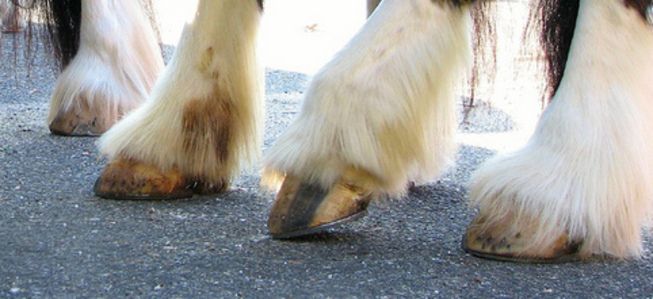
Reference: Excerpts from a blog by Marijke van de Water (Equine Health and Nutrition Specialist) from Rivas Remedies (www.rivasremedies.com)
Horse hooves require tremendous amount of nutrition including protein, sugars, vitamins and minerals. Minerals such as straight sulphur, selenium, and silica are significant in overall hoof health. Silica promotes bone health, strengthens collagen and hardens the hoof wall, while selenium and sulphur contribute to collagen production and strengthen the cross link bonds in the keratin.
Sulphur – the bonding agent
Sulphur is a critical nutrient for strengthening the amino acids (protein units) that serve as major building blocks in healthy collagen to form a strong hoof wall. Obvious signs of sulphur deficiency include poor hoof growth, dry and cracking hooves, poor hair coat, skin conditions and allergies. Sulphur can be supplemented as methionine or as Horsetail herb.
Selenium – a must for hoof health
A selenium deficiency in the hoof can appear as horizontal cracks near the top of the hoof below the coronet band, a yellowing frog and/or lameness due to either weak hoof structure or strained ligaments and tendons. Selenium can be supplemented in either an inorganic form (known as sodium selenite, which is actually a by-product of copper mining) or in an organic form. Sodium selenite is the most common supplement available but is also the toxic form of selenium which is why it cannot be given in extreme doses.
Silica – undervalued and underutilized
Silica is not only critical for the early stages of bone formation but also plays a major role in the formation of the collagen matrix of bone and cartilage. Normally horses obtain small amounts of silica from grass and hay as all plants use silica to provide rigidity and structure to their leaves and stems.
Deficiency symptoms of silica include weak and brittle hooves, sand cracks, abscesses, lameness, inflammation of tendons, and bone weakness with loss of density. Nutrient Sources Some of the best plant sources for silica and sulphur supplementation is horsetail and oatstraw. Horsetail has a number of other benefits: strengthens the respiratory system, improves skin and hair coat, aids urinary function and increases calcium absorption. Poor hoof circulation is always a factor in unhealthy hooves since improper hoof mechanism constricts blood supply and therefore the delivery of oxygen and nutrients. Horse hooves are very much a reflection of the whole and the treatment of the hoof should always consider the whole health of the horse. Conversely, treating the whole health of the horse will always benefit the hoof.
Homemade Meal Recipe for Horses
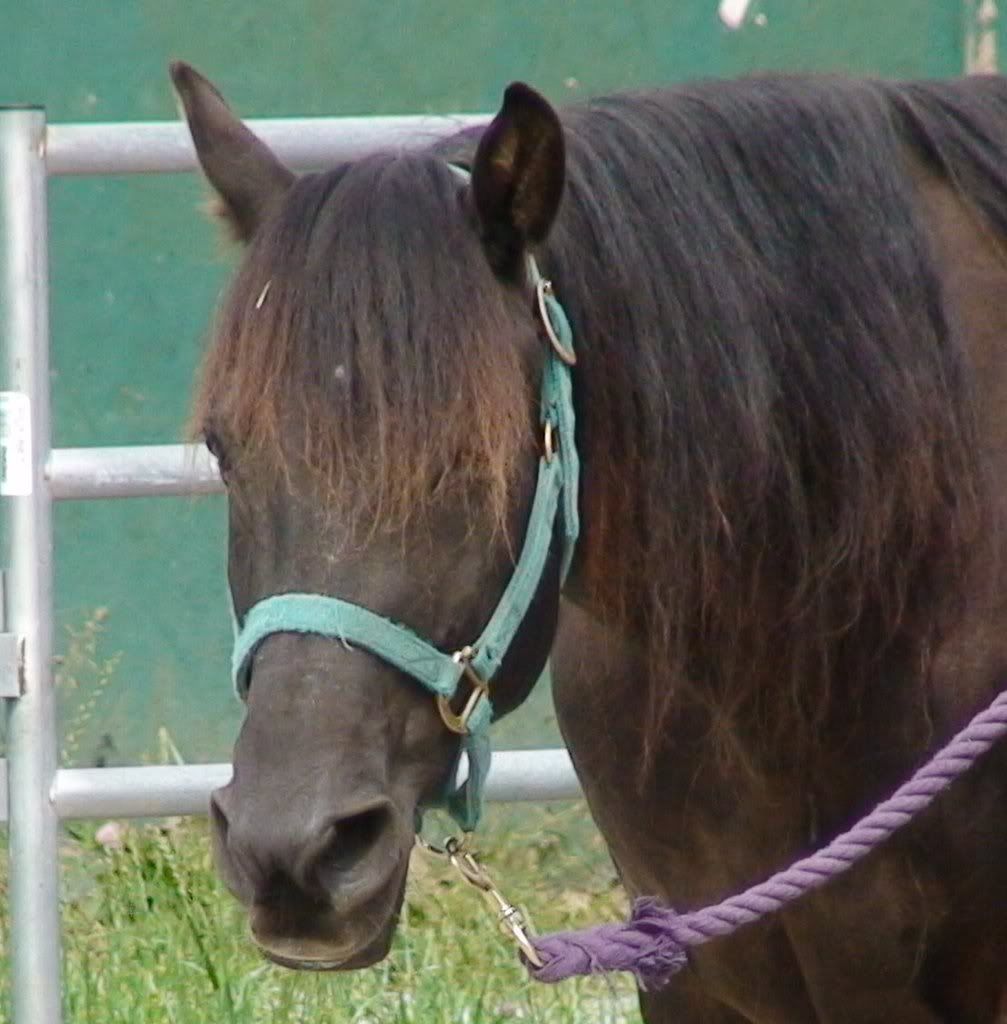 Reference: Sourced from a blog post written Marijke van de Water in www.rivasremedies.com
Very frequently clients ask me if there are any equine commercial feeds that are healthy and suitable for their horses. For convenience I wish it was possible to recommend an all-around commercial horse feed but every horse is so unique with so many different requirements that this is almost impossible to do. The other problem is the ingredient list: most commercial feeds are full of unhealthy products including poor quality oils, grains, sugars, molasses, fillers, binders, empty calories and by-products…it’s like trying to recommend a processed food program for people.
Nothing beats a home-made meal so here is a recipe for one that horses like and that they can enjoy frequently. It’s also a great vehicle for mixing in supplements. The quantities vary depending on the age, weight, lifestyle and exercise levels of your horses so use the following quantities as a guideline.
*Beet Pulp, always soaked – 1-2 cups
Wheat Bran – ½ – 1 cup
Wheat Germ – 1-2 Tablespoons
Alfalfa Pellets – 1-2 Tablespoons to ¼ cup – if necessary for increased performance
Happy Horse or Happy Horse Senior – 1-2 Tablespoons
(Provides a plant-based source of all the trace minerals and vitamins in
a highly absorbable form to which added nutrients can be added as necessary.)
Fruits or vegetables – feed ¼ to ½ cup of any blend that your horses enjoy – e.g. apples, watermelon, peaches, plums, berries (all kinds), cauliflower, carrots, beet tops, peas, etc.
*Use soaked Soybean Hulls (1-2 cups) as a beet pulp alternative if necessary or for variety.
*Twice per year add Pro-Colon probiotics – ¼ tsp for 3 weeks. Riva’s Pro-Colon is specifically formulated for horses and refrigerated for maximum potency.
Natural Healing Therapies – Amazing Chia Plant (Part 2)
Reference: HolisticHorse.com – Andrea Baldwin is an Herbalist and lifelong horse advocate. She is currently studying at David Winston’s Center for Herbal Studies to expand her clinical knowledge. Andrea is also pursuing her practitioner certification in Equine Acupressure with Tallgrass Animal Acupressure Institute.
Last week, we discussed some of the amazing benefits of Chia Plant. We continue and complete the series today in Part 2. Read on and let me know your experiences too.
Hydration
Chia seeds’ ability to absorb up to 12x their weight in water can help your horse stay hydrated. The balance of electrolytes in the body is assisted by the chia seed’s ability to retain moisture, slowing carbohydrate consumption, a plus for endurance or performance horses.
Antioxidants
Chia seeds are high in antioxidants including the flavonoids quercetin and kampherol, which are both anti-inflammatory and help to reduce free radicals in the body. The high levels of antioxidants in the seeds help to stabilize the EFAs in the seeds from rancidity, and not lose their nutritional value, giving it a long shelf life in your feed room.
Minerals
Chia seeds contain small amounts of calcium, phosphorous, magnesium, potassium, zinc, iron, manganese and boron (boron and magnesium work together to increase calcium absorption).
Sacred and Powerful
Historically, chia seeds were considered sacred, used in religious ceremonies and a staple in the diet of the Southwest Native Americans, Aztecs and Mayans. Aztec warriors were able to run long distances powered only by small amounts of chia seeds and water. The commonly known name of Chia was translated from the Aztec word ‘Chian’ which means oily, while the Mayan translation comes from the word ‘Chiabann’ meaning strengthening.
The seeds of the chia plant offer numerous health benefits for your horse packed into a tiny palatable seed.
Disclaimer: We always recommend consultation with your equine vet prior to using any of these natural products. They are not meant to replace vet care.
Click here to get your free gift!
Privacy Policy:Your email address will never be sold, rented, or given away.